Reduced drop-off by 30% across critical moments (search → selection → booking → visit) by designing an end-to-end patient experience that helps patients find reliable doctors, schedule appointments fast, and confidently complete video consultations.
Timeframe: 3 weeks
Role: User Experience Consultant
Self-owned : UX strategy, UX/UI design, prototyping and validation

Ownership & Key Decisions
Responsible for the whole experience, including defining the journey and information architecture, designing flows and UI, building the prototype, and taking notes for validation before handing it off.
The choices I made:
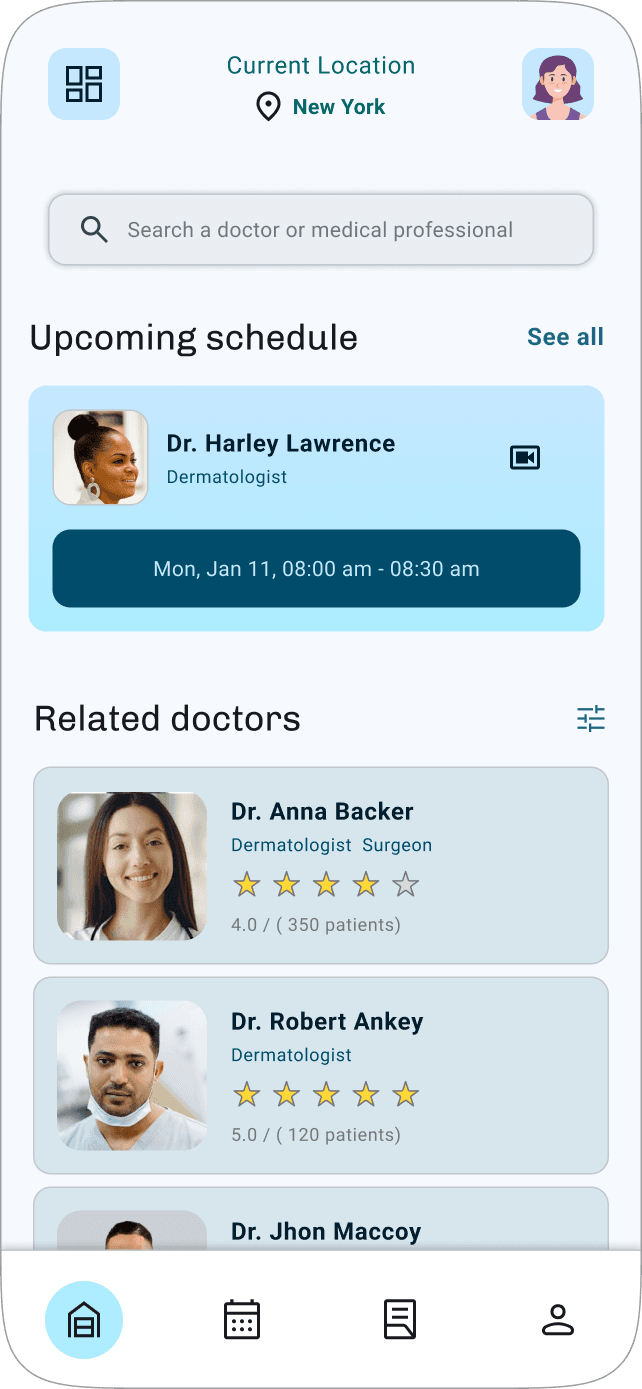
Put Upcoming schedule on Home → reduces missed consults
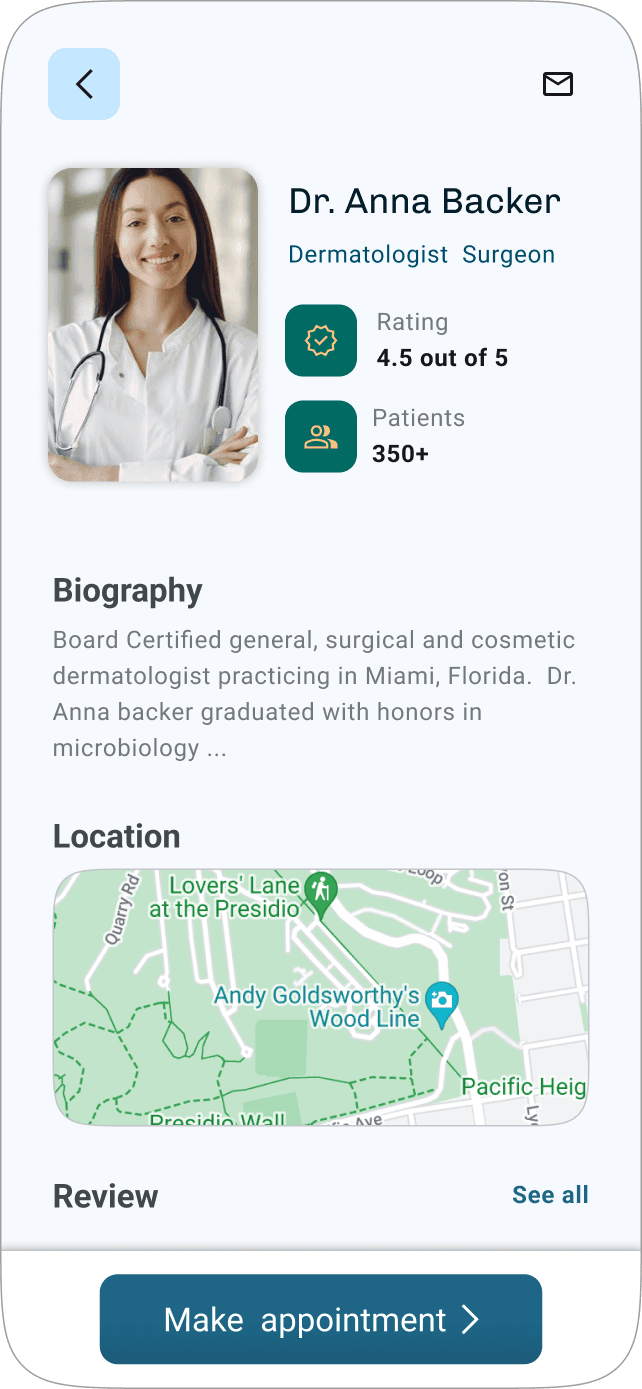
Show signs of trust early on to help people make a confident choice more quickly.
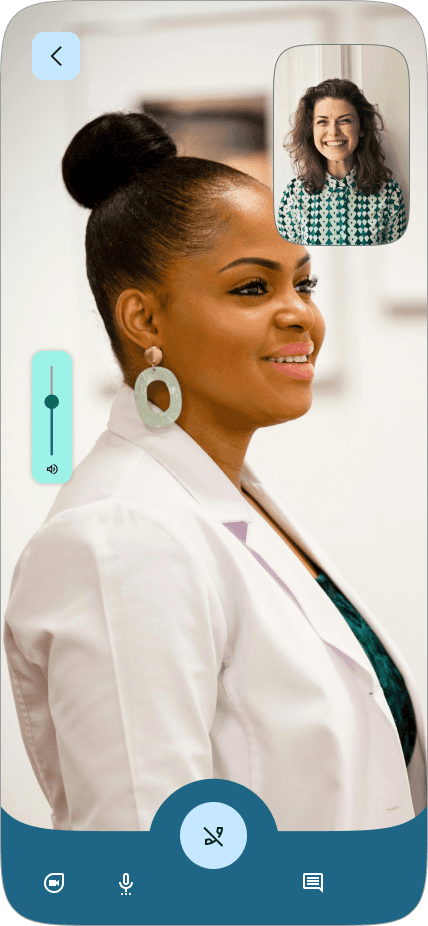
Keep one CTA (“Make appointment”) → less decision overloadMake video controls obvious → prevents call-failure stress
Problem
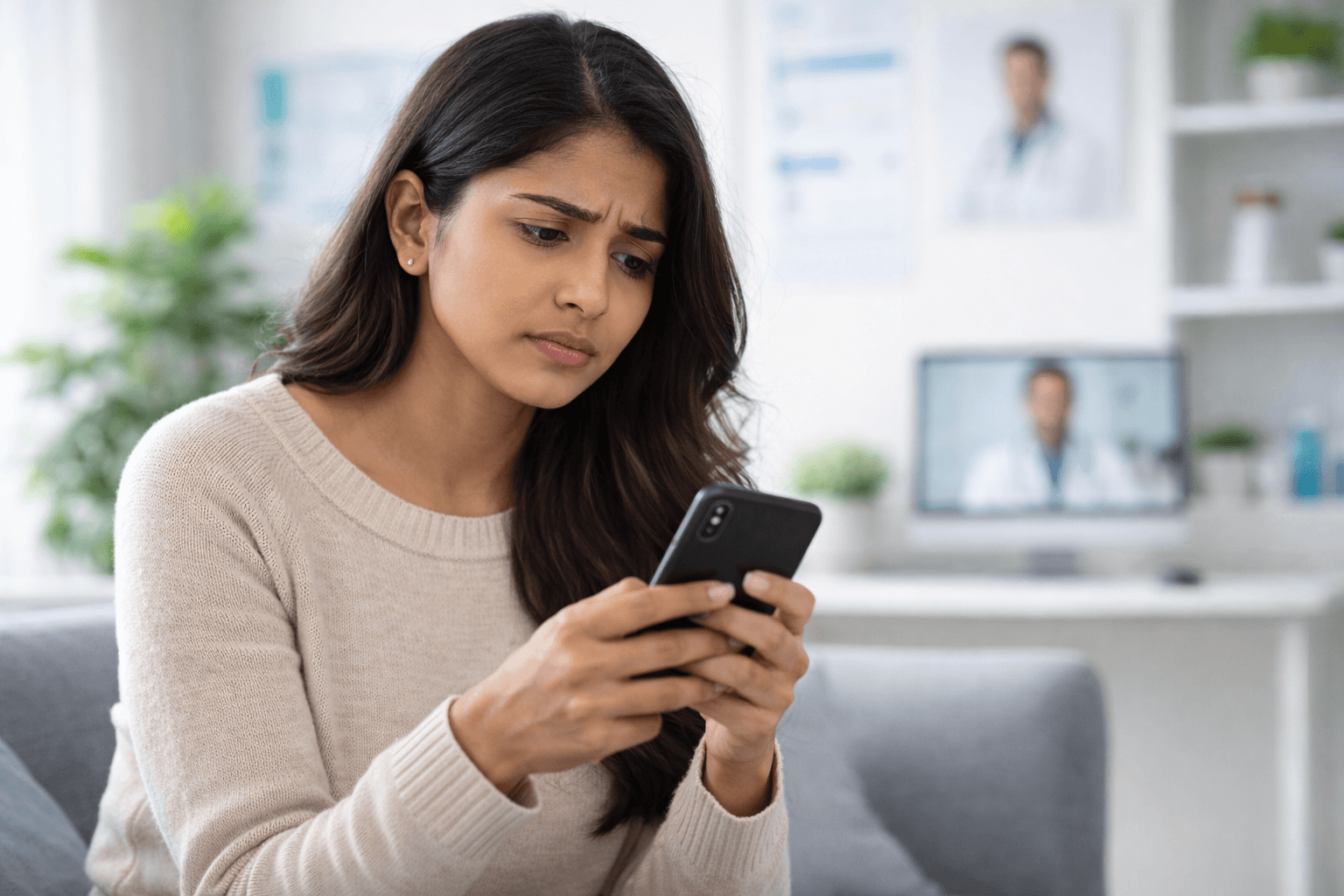
Users stop using healthcare apps when:
Discovery is slow (finding the right specialist)
Trust is unclear (who’s credible?)
Booking + video feels confusing (drop-offs)
Goal: make it fast, trustworthy, and easy to complete end-to-end.
Constrains

3-week timeframe → quick iterations, limited scope
Solo ownership → research → flows → UI → prototype → validation
Limited real-world data at design time (profiles/ratings standardized in prototype)
High-stakes trust context → clarity > visual novelty
Teleconsult usability → controls must be instantly obvious
Approach
Designed key moments:
Made one clear path: Find → Rate → Book → Go (Video)
Home: search, see upcoming appointments, and get helpful suggestions.
Doctor profile: trust signals + reviews + one clear CTA
Video visit: obvious controls + minimal distractions

Validation
To validate the design direction within the 3-week window, I ran lightweight usability testing on a high-fidelity prototype (remote, task-based). These are prototype findings and will be re-validated after development.
Prototype usability results (directional)
Remote prototype testing: n= 8 + 8 + 8
All over findings
~85–90% completed find → profile → book tasks
Key info found in <10s
~80–90% understood video controls on first try
What this implies
The structure reduced ambiguity and improved user confidence at the two highest-risk points:
choosing a doctor
joining/controlling a video consult
Next step: After development, re-run usability testing
booking drop-off rate
time-to-book
video visit join success rate
support tickets related to consult controls
Deliverables